Sara Matson

savoy corpse reviver | blanc de noirs | sundowner


Sara Matson has her MA in Literature from Northeastern Illinois University. She shares her Chicago apartment with her amazing husband and their three young boys, who all happen to be cats. Her work can be found or is forthcoming in Burning House Press, Occulum, Dream Pop Press, Snapdragon Journal, Waxing and Waning, her mother’s refrigerator, and elsewhere. Sara Matson self-published her first chapbook, corporeal sin in 2014, and her second chapbook, electric grandma is forthcoming in 2018. She tweets as @skeletorwrites.

Kat Meads

Niece Notes:
Love & Such

West Coast
Sunday

Dear DeeDee,

In my first-round Virginia Woolf infatuation, I came across a photo of the author leaning against a stone doorway, right hand stuck in the pocket of one of many layers of clothing, left hand crooked and rising toward her chin, right foot kicked out behind her. You likely know the one I mean. It is now everywhere published. New to my eyes, the most riveting aspect of the image, besides its seeming informality, was Woolf’s tilted head and facial expression. I made a photocopy because I thought it captured the writer in one of her mad/near-mad moments and eerily conveyed the essence of that mind state—off-kilter, vulnerable, ever so slightly on guard. I was wrong, of course. The photo was taken at Knole, Vita Sackville West’s ancestral digs. And it wasn’t a visual of Virginia mad; it was a visual of Virginia in love.

Love,
Aunt K

***

West Coast
Tuesday

Dear DeeDee,

Confessional poets—and, let’s be honest, the suicides of confessional poets—turned a sizeable chunk of your aunt’s college contemporaries into anguished romantics. The fragmented self’s fragmentations exhaustively examined. Psychic wounds owned up to and flagrantly exposed. Such unabashed, unashamed and uncensored revealing left us awestruck—and envious. But whereas self-evisceration on the page came off empowering, in life mode that kind of sensibility got folks ostracized, hospitalized, electroshocked and dismissed as a functioning member of the body politic. Regardless, before we aged out, awe carried the day. And what has any of this to do with your kin? Not much, except as illustration of the path not taken. However miserable the living, none in our family seem to have opted to speed the finale. Our collective MO tracks more ornery—and more resigned. In the face of failure and disappointment, disaster and heartbreak, the Meadses, as one non-relation put it, “set their jaw and hunker down.”

Love,
Aunt K

***

West Coast
Thursday

Dear DeeDee,

Your grandparents and I first met your mother when she and your dad drove in for the weekend—a visit that couldn’t have been without anxiety for your dad, concerned as he must have been about receptions. (Not in terms of what we’d think of your mother; rather, what your mother might make of us.) The day was dreary and damp and so our living room looked more dreary and damp than usual. Adding to the dampness, I’d miscalculated their arrival time and was just out of the shower—a crushing turn of events. I’d desperately wanted to make a good impression on your mother and how could that be accomplished with a “wet head”? They sat close together, your parents, on the couch, your mother with her standout elegance looking like someone from another world (as she was). And yet she behaved as nervously as your father, holding his hand, working hard to make us like her, as if any other outcome were possible. It was obvious she adored your dad, and anyone who adored your dad had the inside track to our affections. But the truth is, quite apart from her adoration of our son and brother, we fell madly in love with your mother that afternoon. Every last one of us.

Aunt K

***

West Coast
Friday

Dear DeeDee,

Did your parents share they’d considered building a house on a back acre of the farm? Their choice would have made a spectacular lot. Surrounded on three sides by old-growth oak and pine, they would have looked out into open fields: a wide view from a protected spot. They would have lived Appleton’s prospect-refuge theory of geographical contentment to a T. Since the woods hadn’t then been cut for timber, you’d have had a choice of massive trees to climb or field rows to run. In any direction—north, south, east or west—you wouldn’t have felt penned in, not in the slightest. I understood your dad’s wish to return home and work with your grandfather and because the idea meant so much to him felt grateful to your mom for supporting the plan. Your grandparents would have gladly given over the acreage, thrilled to have your parents live so close by. But the farm couldn’t support two salaries then, perhaps never could. It was hard for your grandparents—hard to acknowledge their helplessness in the face of incontrovertible fact, extremely hard to disappoint your dad’s hopes. I know it was hard because whenever your grandmother talked about that conversation, even after your grandfather died, she cried.

Love,
Aunt K

***

West Coast
Saturday

DeeDee,

You’ve noticed, I’m sure, that while previously I’ve not been shy about discussing the end of my own marriage, I’ve said little about your parents’. Avoidance, pure and simple. I’ve been circling the subject of their split because, despite the time gap between then and now, I’d rather not admit (or believe) it happened. Your parents’ divorce was infinitely more distressing than mine—on your dad (of course), but also on your grandparents and (yes) on me. Because we believed in your parents’ coupledom, you see. Believed in its rightness, its fitness, its resiliency. Proved wrong, we not only lost the regular companionship of your mother, we lost faith in the accuracy of our perceptions, in our interpretation of the manifestly true. In terms of age and wedding dates, your dad and I divorced out of sequence. I was twenty-six when I called it quits, a mere year and a half into the contract. Your parents’ union lasted twelve times that. I so vividly remember opening your dad’s letter outside the Northampton post office. Where I stood on the sidewalk. The level of snow clumps on either side. The thin, high voice of someone behind me. I assume your father wrote not trusting himself (or me) to discuss it over the phone. He gave no reason for the separation in the letter. Neither he nor your mother ever shared the reason/reasons. For me to speculate here would be heretical, disrespectful of that discretion. But I do brood about their breakup. To this hour, I brood and miss your mother terribly.

Love,
Aunt K

Kat Meads is the author of 2:12 a.m. – Essays (Stephen F. Austin University Press, 2013), a ForeWord Reviews Book of the Year finalist and the recipient of an Independent Press Publishers (IPPY) Gold Medal. Her nonfiction has appeared in The Prague Revue, Identity Theory, Hotel Amerika, Zone 3, The Southern Review and elsewhere. Her essays have received four Notable citations in the Best American Essays series, the Dorothy Churchill Cappon prize from New Letters and the Editors’ Choice Award in Nonfiction from Drunken Boat. She teaches in Oklahoma City University’s Red Earth MFA program. (www.katmeads.com)

Lindsay Parkhowell

At the crossroads


Sources: Fear of Disclosure: Psycho-Social Implications of HIV Revelation (1989) by David Wojnarowicz with Phil Zwickler, Europe after the Rain: Dadaism and Surrealism, Arts Council of Great Britain production, directed by Mick Gold,


Lindsay Parkhowell is a writer and editor living between Athens and Berlin. He is the Secretary of Propaganda and Poetics for the Avtonomi Akadimia, Athens, and the head copyeditor of the ERC Project Early Modern Cosmology at the Ca’ Foscari University, Venice.

Lou Sarabadzic

To the happy few

Languages, like immigrants,
must be carefully chosen.
Then and only then
is it decent bilingualism.

Otherwise we call it
they-came-here-for-our-economy
how-are-their-children-going-to-cope
why-can’t-they-learn-our-language.

Moi aussi je parle un petit peu de français.

Escaping war or conflict
is no proper way to linguistic skills.
Nor is coming from former colonies.
‘So… you speak African?’

Bilingualism is this dream wedding
performed in a fine white dress.
It’s the immaculate story
a passionate you tells smiling guests.

Je l’ai appris à l’école.

In the UK they exulted.
Princess Charlotte is already bilingual.
Aw that’s so cute but what about
the cuteness of Punjabi? I asked myself.

My young neighbour is trilingual
and I didn’t see
rushing to the area
any national news agency.

Je m’épelle John, je vis à Londres.

Sometimes, unlike him, they call me ‘expat.’
If I say ‘immigrant’, they laugh: ‘I don’t see
you
as an immigrant!’

It’s basic European maths.
You’re not twice as diverse,
congratulations,
but twice as dominant.

Alouette, gentille alouette, alouette je te plumerai.

Language is power.
As former Empires we form an alliance.
Alliance means wedding ring
and I said no. But they carried on anyway.

Translation matters

They say learning French is so hard. How can a chair be female? How come there be no neutral?
They never seem to notice how hard it is for us too. Learning English, meeting them there. It’s not about grammar. Imagine having to deny existence to all the spirits of your home. Imagine unlearning life. Suddenly, a chair isn’t she anymore. She’s it. The violence of it.
Everything dies as we speak, and we watch it all turn into soulless surfaces. We bury them with our words, we hold them close, inert and loved, in silent shrouds.

Don’t say we turn them into stones.

Stones are alive, like goddesses.

Poems on two languages for the use of those in the middle

Global warming
Four is the hottest of numbers.
Sixteen the hardest to seize.


How to say ‘break a leg’ in French
‘Oh, shit!’


The right order
To lounge = to sit in a chaise longue.


Inside Out
If in French, I say: ‘bring me a casserole’, I’m not only rude, but I’m about to cook something.
If in English I say: ‘bring me a casserole’, I’m not only rude, I expect you to have already cooked for me.


A scene at the restaurant
Rare meat?! Yes, indeed. I’ve never seen one in England so far. They say it’s health and safety regulations, something to do with temperature. As always they blame it on the weather

An essay about cultural differences

In France, airport books
are sold in train stations.
          [Romans de gare]
You’d think it’s just about location.
That’s because it is. I just said it.
Also because in French a house of cards
becomes a castle.
          [And we say the British are the monarchist ones]
Anyway, it’s all about places: instead of pouring one last drop in a vase,
in English you put the last straw on a camel’s back.
&    nbsp;     [Notice how evocative the desert]
Now, if you think you only need to master one language
to know where you are,
of course you’re wrong.
          [That’s the privilege of the poet. I get to decide until language shuts me up.]
Take art, for instance.
In French, I was told that Marcel Duchamp faisait des ready-made.
You can imagine my confusion when I was told in England that he made objets trouvés.
          [Couldn’t we just stick to one of these?]
Modern artists, they like to make things complicated.
Linguists didn’t want to be left behind.
They came up with a theory:
if you can master two languages,
then you’re allowed to speak your own.

It’s important to bear in mind, however,
that although it gives you that air of proud arrogance
and free cocktails at exhibition openings,
bilingualism can sometimes lead to quite a few disappointments.
For instance in France, décolletage is hard work in a factory.
It describes the mass-production of metal parts enabling any revolution.
In England, it means: any human décolleté.
          [For an exploration of the link between women’s bodies, neckline, and revolution, see
          Marianne – but otherwise, you’ll agree that this is somewhat misleading]

Fear not about equality.
Deception in men is also quite tangible.
See, groin in France a pig makes.
          

[that’s its nose]

In England groin makes the man.
[redacted]
The Northern you go, the more below the belt.
The Southern you go, the more into the farm.      [Yes it is all about places]

WOMEN, n. [who mène]

Almost like men
but with
one more syllable.
Wo-men.

If not half the men, then,
men almost doubled?
Fe-mme and Ho-mme
evoke another family.
– Mme
that’s what we are.

Mme means Mrs.
I knew all men were women
but they don’t
realise it (yet).


Lou Sarabadzic is French and live in the UK. She has published two books in French: a novel, La Vie Verticale, in 2016, and a poetry collection, Ensemble, in 2017. She also writes in English and have had poems published in Gutter and Morphrog. She has received in January 2018 the Dot Award for Digital Literature for the #NerdsProject: https://nerdsproject.com/. She is a member of Room 204, Writing West Midlands’ writer development program. She also has two French/English bilingual blogs focusing on narrative non-fiction: https://predictedprose.com/ on OCD and mental health, and https://telpere.com/ on a father-daughter relationship.

Ζωή Σκλέπα . Zoe Sklepa

ΤΟ CLUB ΤΩΝ ΚΥΜΜΑΤΩΝ . CLUB OF THE WAVES

2 | Zoe Sklepa | CLUB OF THE WAVES

Silence suits me You are like me I can come close to you without my feet A balmy Polynesia comes through me A yellow lit shore The hair is tangled and the eyes glow Electrified atmosphere He just appears Faded steps are devoted to and then lost in the narrow streets Turning back to the bottom, like an old debt Getting dark, dull song You will leave tomorrow I will sleep at your feet, like a multipling star Into living water I unloaded my old self The world is simple I kept your pulse for a moment Among the things that surround us Musical rhythm A verification of dizziness I feel a cool breeze bent over my desk, over maps.

Η ησυχία μου ταιριάζει Είσαι κι εσύ σαν και μένα Μπορώ να έρθω κοντά σου χωρίς τα πόδια μου Σαν βάλσαμο με διαπερνά μια Πολυνησία Μια κίτρινη φωτεινή ακτή Τα μαλλιά είναι αχτένιστα και τα μάτια γυαλίζουν Ηλεκτρισμένη ατμόσφαιρα Αυτός μόλις που φαίνεται Βήματα σβησμένα που αφιερώνονται και ύστερα χάνονται σε στενούς δρόμους Γυρνώντας πάλι στο βυθό, σαν παλιό χρέος Σκοτεινιάζει, θολό τραγούδι Αύριο θα φύγεις Θα κοιμηθώ στα πόδια σου σαν αστέρι που αναπαράγεται Σε ζωντανό νερό ξεφορτώθηκα τον παλιό εαυτό μου Ο κόσμος είναι απλός Κράτησα το σφυγμό σου μια στιγμή Ανάμεσα στα πράγματα που μας τριγύριζαν Ρυθμός μουσικής Επαλήθευση παραζάλης Νιώθω δροσιά σκυφτή πάνω στο γραφείο μου, πάνω σε χάρτες.


Ζoe Sklepa is a visual artist. http://zoesklepa.blogspot.com/

Tom Snarsky

Principle of Sufficient Reason

The arc of the surgeon’s arm
as she lifts the skin from your
left buttcheek and reinstalls
the strip over yr burned area,
good as new like a commodity
only it went from on you to on
you rather than from without
to consumed. If you assume
the ark has enough room for all
forms of life then perhaps you
think there’ll be a lot of empty
rooms, seeing as the undersea
fauna have no need to come
on a boat and even less need
to be led there by humans.
So you can sit in the vacant
chamber reserved for two blue
whales and nurse your newly-
dressed wound in front of the
green background you thought
would look so good against
their huge, majestic bodies.
You can stay there and scroll
through pictures of them
on yr phone for hours, failing
to notice that you haven’t felt
the itching in the affected area
since your back slid down the
green boards and your first set
of search results came through.


Tom Snarsky teaches mathematics at Malden High School in Malden, Massachusetts, USA.

Adam Strauss

Two Times Four, Or: Eight States Of One Sentence

Suspiciously like snow Falling failing dead bodies lit blue From under inside kith insidious coil Promises no more tall malaria Frames lintel I inter my self Along its casuistry circuit cold glow Gorges calla leaves me lily leavens or Plash the lash the ash the Tree honors eviction itinerant Oath oats edge pond mallow fences Some pearl we tongue on parole Did it won died it thrice Spied lit sped light Deadened only out loud Speakers spackle clear Cuts and cutlass bouts Like cold fronts quiet Or I am on diet of blood Wort torque ordered From ere before here Ever verified its turn Thus I unto I stare down burn But love unclipped quicker There fur sheds that we can’t Keep budget-torn limbs warm in gut intra Mural ardent mirror limbic distills Noxious looms this louvers his warped wind- Eye along starlit lengthy burr Drops clarity unto clear beer Vienna Tropes Eau Claire subtropical snow breathed On like ontologies gyroscopic fall laughing Gas assigns mother her lode hirsute boredom Called him by his crappy foot loves pyre Rips rot rudders gut tug o’ tag officiates slow Justice some slick soma morose static we Cancel keep cooler than collar that one Times one timothy too did peer dialed pear ill Root Taurus simmers Me down eider town On which I conch On which I wrack Like bladder lick sea- Soaked rags fish flash Then freeze, fossils could Not tell more adroitly To you, ruin under Ruined yew, tree for Rooting out Poison, silver Seam I drink neat, Nettle for chaser Chased why blued where Scared me some fresher fresh air Freshened weir yes water yes weird Staked to and through dialed bone Bandied tone for plus here pick Out and outer banks serried Ranks ankh wild she pickles Stems mastic sunny lactation On call only one wonder Full fathoms live stream Reels lyric quanta fords Parched marrow arched tectonic Ate slow return breath Wreaths briar reef culls glow Throws shade, shares Allotment of Shadow we recall, Calligraphic fecal Matter tame repeals Then throws Up pearl, irritant makes Possible rappel and Please, please, give Me some knots, bumps Laced through with Quartz; look! Each foot of Descent glows, slows Sense to utmost savor Left felt fled flitch borders blue Asphyxiation nitpicky oxygen mouth stuffed Full o’ fulsome cotton yes wretch When you venue seeds ceded Watch awe sums tousles Error in its air entre regency regnancy With blood for lips pissy appellate prone To sluice slice licentious fact checks Veracity at door revolves internment diaphanous Lobe bellows Ebola below zero regrets Ice exactly translates sun targets Language for shadows lashes we Call eyes ipecac for nerves fur foment dregs Plush ampule lush ply sheer pale leashes pallid Took bones, clacked Them together like some Hailing, proscenium Stages weather and why Dozes through, plucks bright Berry dozens Zen feeds Back unto some lariat, milk Teeth channel, vector corvids ride Like ponies crop my nape, hiss nepenthe Pants bright star, wood eroded, asp as Thou art, kernel Daemonic ken plants in cochlea Cannot tell sentence, stop Nor go farther than now.


Bouquet For The Unveiling

With my pachyderm and paunch perm I turn and burn. I under. Estimate. My esteem rates no concern. My shadow thinks. Sphincter (t)wink(le)s. Sonata for wire. Albumen for flyer. With mutation and elation I burrow. Brook ligament. Book secret agents onto expired talk-shows. When hunger strikes, puke it out. Kenosis got it but Kryptonite dropped it. Super flew. I spelled you and you spelled hell. We passed each other up, upended oceans like freeze frames motion. Body blessed. Bawdy confessed its love for jack. Lantern at lectern. Tantrum piped into room no anthem squeaks through.

If you catch it: marriage. Aggressively marine, restively aqua. Corp de ballet, knives for tights. Look at them flash. Look at him fuck! Fuck him and his decrepit senses. Fuck me and my ableist slur. Fuck us fist us pull us by our pits and set them lit. It ain’t romantic, nor frantic. All this grotesquerie occurs with precision. Undergoes purling revision. Otherwise known as toned down to death. Bud wiser in its theory of breath. Molson, Olson, nictitating current. I rough love. Love rubs me unto heehaw. Hawk breaks my wrist and crying I am most poet mostly awful sight you don’t need but needlessly seeds garden your carriage comes crashing, aching all over this math after nightmares in attics.


Syntax

I pulled he taffy laughy made day broke
Its promise

Broke clay piney drip
Sheens shattered whorls

No sibilance can mend man can indeed
Say I have

Broken law men made
Of piss and silk and glass.


Some Shade

All that water
Shocked, awed her
Unto some cleft
Where colors bereft
Their vitiating hots
Know future rainbow shods
Tint’s tippy toes
Like silk flows
Its couture around her arms
Stock-still and alarms
That woman who loves
Chestnuts, their honey glazes doves
Shot out tinsel trees
Wave as we wave adieux sea’s breeze.


No More Hard Sky

I parked at that dot, danced polka
To punk rock crossed with calypso
While clouds learned they can sew
Blankets to keep sun comfy: volta
Where thermals court, scold schwa
For interrupting sonic juice, and no
Birds pledged fealty heavy glow
Melts gem stems my brain—goes duh.

After said amnesia, car wouldn’t start.
I recited postmodern canons, but
Reed nor Ashbery abutted this rut.
Snow fell its future preterit, like heart
Limns Linzer slops out crust, or bud
Sets lymph styptic—collapses blood.


Adam Strauss lives in Hattiesburg, Mississippi.  Most recently, he has poems out in Yes Poetry, Fence, and The Arsonist Magazine.

The Inauthentic Issue

intro

Is inauthenticity authenticity in disguise? Is inauthenticity a wish to forget oneself? When time becomes inauthentic?

Let me be a little more inauthentic. Is inauthenticity a teaser? Does inauthenticity never ask for permission? Inauthenticity is also a fan’s affair.

How many facets does the inauthentic have? Is there a dark inauthenticity? Is there an inauthentic darkness?

Is the inauthentic a surface or a deep structure? Why inauthenticity matters?

Are we inauthentic for each other? What happens when one’s mind drifts from the authentic to the inauthentic? Is there beauty in it?

Is inauthenticity the fabulous result of techniques? Is inauthentic another word for puzzle, translation, intent, alteration, modification, or memoir?

Now is the time to try something inauthentic, to pretend to be inauthentic, to understand the inauthentic and even play with it.

The theme of Sofía Bertomeu Hojberg’s sound art piece is illustrated in Heidegger’s “Being and Time”, a treatment of “authenticity ” (1927). “Heidegger’s view seemed to be that the majority of human beings lead an existence that is inauthentic. Rather than facing up to their own finitude—represented above all by the inevitability of death —they seek distraction and escape in inauthentic modalities such as curiosity, ambiguity and idle talk.”

“Instead of using a time lapse technique to show a sped up but naturalistic progression of day turning into night,” Jack Williams uses in his video of Tokyo’s skyline, “the sound of a light switch for each cut between day and night to highlight the mechanical and inauthentic process of video editing.”

Tomo Stanič says about his photo-collage: “The culture of images has overflown not only the market and the advertising industry, but also often represents a quicker and more flexible way of providing information and means of communication, (compared to the written word). Contemporary images are, in fact, visual insignificances, simulacra (J. Baudrillard), assemblages, poor images (H. Steyerl), they may even be undefined and unrecognizable; in the last instance, it is not so important what they are – false or true, public or intimate, professional or lay, composite (assembled) or simple – as where and in what way they appear.”

Many thanks to Zoe Anastassiou & Mark Blickley, Tessa Berring & Kathrine Sowerby, Sofía Bertomeu Hojberg, Chris Caines, Sean Cearley, Dimitris Foutris, Antonis Katsouris, Evangelos Kyriakos, Tiana Lavrova, John Morgan, Iordanis Papadopoulos, Tomo Stanič, Harun Tole, Chen Wang, and Jack Williams for their brilliant sound, concrete, video, visual and poetic works.

Dimitra Ioannou

Zoe Anastassiou, Mark Blickley

Real Realism: An Art manifesto for the Disenchanted


Zoe Anastassiou is an actress, writer and Associate Artistic Director of Helluva Theatre Company. She has performed onstage in England at Shakespeare’s Globe and the Old Vic Theater.

Mark Blickley is a widely published and produced writer and proud member of PEN American Center and the Dramatists Guild. I am currently writing a one-woman show for Zoe about the life of Baroness Elsa von Freytag-Loringhoven titled Mama Dada.


Tessa Berring & Kathrine Sowerby

MOUNTAIN RANGE

Lying down, she looks like a mountain range. Someone told her that once and she likes the sound of it. Says it over and over. Imagines bees and wasps fighting over the wild flowers that grow on her slopes. But there are dishes to do. And questions to answer – how do you make the bubbles so small? That has nothing to do with her but an answer has to be found all the same. She stares into the sink and wants to take her clothes off and start shivering. To shiver is to survive. To shiver is to be muscular. Like the shirt ripped at the sleeves that she will never throw away. ‘Come here’, says Someone else. Look at the bees! Look at the way sunlight hides! But she is lying down again and listening to the ticking of the metronome that makes silence go faster. That catches up with the drip. Make me a cup of tea, she thinks, but never asks. Her name is Maxime. She likes marzipan and brown bread. She never wears stockings, open-toed shoes or anything yellow. Her life is not hard – the kitchen floor is hard and Someone else can be hard to understand. But no one is hurt, not yet, and no one has come to the door for a long time. Or is her name Clara, as in Clara with the pale blue carpets? The thing about skin is that it is alive. She is Maxime on odd days and Clara on even. If only she could find the rubber bands to remind her what day it is, what name, and when to roll out the carpet that matches the parakeet’s wings.

Outside is a scarecrow wearing gloves and a polka dot blouse. It has no face as far as anyone can see because it was drawn so faintly. Clara will go over it. Over and over until the face is ruined and apologetic. It is raining and the yew is as poisonous as ever but at least in the bath she can make waterfalls, pools, rivulets, feel the slip of fish, watch them blow bubbles with their little ‘oh’ shaped mouths. But she can’t stay in too long, not Maxime. She gets cold so quickly. Clara is chewing celery and thinking about the man with teeth stitched on his lapels – son of a dentist and a bit too shamanic. She couldn’t stay long, there was nothing to say and the kitchen was so sticky. Maxime! Are you awake? Of course she is, damn cat scratching at the door. But she leans her elbows on the table while she drinks tea and whispers in her ear, ‘Stop waking me, you baby’. Clara never feeds the cat. She opens the door and doesn’t think for a second when the cat might return. But Maxime can whistle, she’s won prizes but keeps that a secret, and the cat comes running. Then it sits and licks for hours. Maxime watches until she is bored, then goes and looks for spoons and disinfectant. Clara is still chewing celery. It reminds her of the river. It was blue on one side, brown on the other and belonged to no one, especially not the fools that paddle down it. Tip the boat, says Maxime. But it’s an even day so nobody hears her.

Someone else is swinging on the washing line. He looks lonely like that, dangling above the ground. They should take a picnic to the river, swap names, find a new person – or a dog. Some dogs believe they are children and are always hungry, eat whole loaves and bones buried by foxes behind the gladioli. Others know there is nothing better than sticks and chasing. They are the boring ones. Clara likes to think that but envies the concentration in their eyes. And the yellow sandals. Can they be hers? They seem to fit so she must have been wrong about who is who. Again! Down to the river. The most feared things can become the most favoured and all she wants to wear is yellow. But the dress looks ugly. What was she thinking? And only yesterday she bought a lion with plastic whiskers and a rabbit fur mane. The river is deep. She wades into the blue side, feels the water round her knees, her thighs. The stones are smooth beneath her feet and when she moves they move. Someone else is already swimming. A dog is barking. Or was that the day before? She thought the scarecrow might keep visitors away but they insisted. There’s always the back door, she thought. The current is pleasing like the pull of bathwater.

Lying down, she looks like a mountain range after heavy rains and pink morning sun. Drips trip over goose bumps on her stomach and thighs. Standing up she looks like… not the scarecrow at least. But back to the river, there are fish nibbling her heels and Someone else is splashing and moving. That’s swimming, she thinks, or as close as it needs to be. She wants to turn away, take off her clothes and swim underwater. See where she surfaces. When did it all become so polite? So divided? Clara dreams about salt cellars. Salt cellars that look like corn on the cob, glazed and shiny on the windowsill. They are empty. She goes looking for more salt but only finds boxes and boxes of paper plates and sunglasses. The sunglasses are thick and brown. More like goggles. She dives into the river and forgets to breathe. Maxime is already at the waterfall. Her sunglasses are pink, rose tinted. She has always been polite, she thinks, then says, then shouts ‘I have always been so polite!’ She wants to learn to spit. She wants to resurface where the water is dark brown like furniture polish. And ticklish like the dangling roots of all those little trees. If she pulls on them, will it all fall apart? Is that what she wants? Mud. That’s what she wants. The weight of it, the feel of it drying, caking on her skin. Lying down she looks like a mountain range. But it has been a long day and tomorrow will be different.

Tomorrow is just more of today, thinks Clara. More of today, she tells the postman. I should be walking, she says to the rose bush, as she waves him away. Come back. Why come and then go? She knows the salt cellars were only a dream. Only a dream, says Maxime. But she can feel the indents in the palm of her hand where she held them. Salt is on the shopping list. It brings out the flavour. Someone else said that, because they read it so it must be true. Like mud. Oh cheer up, says Maxime. But Clara wants to sleep for a while longer. Clara wants to go to back to bed, even though it’s almost today, and pretend it isn’t. Pretend it is yesterday. Pretend that the dream hasn’t started yet. Get ready, salt cellars, you’re up next! Where is the remote control? Maxime pulls at Clara’s feet. They are narrower and longer than hers. Wake up and take your turn, she says. Clara doesn’t move. Footsteps shake the house. Someone else? Someone else, she shouts. Is that you or the cat coughing? And everyone is up because that’s what happens in a house. Even the scarecrow. Running to see where the noise is coming from. Bubbles are fast too but quieter than expected. And the day starts with a cardigan. The name of the dog by the river. Here, Cardigan! Here’s a stick and a bowl of rice with an egg cracked over it. How easy a dog is, thinks Maxime, who has not gone to sleep yet. ‘How easy a dog is!’, she shouts at Clara who is still asleep and dreaming of a dog who is scared of light and reflections, who runs away and bites through things.

Someone else is covered in mud. Maxime squeezes the bottle underwater and tries not to listen to the metronome. Time is running out! And she is not used to the noises of this day. What if the postman comes? Which cupboard does the salt live in? Someone is here, and not just Someone else. She can sense it. ‘Clara! Cardigan needs a walk and I can’t find my sandals’. Clara screams then comes downstairs. ‘Come on then Cardigan. Lets go to the river, the blue side’. Lets throw stones, hold onto our hats, things like that. Have you got a hat, Cardigan? Clara likes to ask questions to the dog, who can never answer back. Come on! Fetch your stick! But Cardigan stands in the doorway, looking out and refusing to move. Not so easy now, Maxime! Clara pulls on Cardigan’s lead and tries to look like someone who finds all this easy. And can she hear footsteps behind her. Maxime? No it can’t be Maxime. The dog is way ahead, concentrating hard. Clara walks faster, faster. The river is loud. Have the footsteps gone? Is this still the dream? She asks herself, No, of course not, she replies, and why ask that when you know you are out of breath from running? Bird rhymes so perfectly with bird, and the wind sounds like the wind. But what becomes of air when it is trapped inside old tree trunks? Lean over, press your face against the bark. Let’s stay here a while, shall we? Cardigan is panting and lies down at Clara’s feet. Maybe it is easy after all.

Clara thinks of a kiss that might have happened near here, of moving her hand the way another hand moved. Like a mirror. That was long ago. Root rhymes with root but when you say it too often it twists into something unplanned and tomorrow. And the river is loud again. Come on, Cardigan. They stand up together and the water is brown and breathless. Is that Maxime on the other side? It can’t be but she waves all the same. Manners are important, the way paths are important. And pillars? Cardigan looks at her as if she knows. The way Someone else looks at her as if she knows. (so many knowing looks – what happened to the secrets? Where did she put them?) But she does know a bridge. It’s that way. Or the other way. ‘Is there someone I can phone’, she says. The river is loud and her voice is lost. Look at all the fish leaping! There was a time when Clara only knew about concrete, and Maxime only knew about grey. There were no fish, no dogs called Cardigan, only thick smoke and things that were always falling down. And while that was sad, the memory is pink and full of the tiniest bubbles ever measured. The kind that fizz on your tongue. They wore bracelets there, and shoes with robust soles (you can’t go out without them so don’t even try). Someone else might have loved it – the signposts, the sharp bends, the washing that span round and round in huge machines. Fish are fools to leap so high, thinks Clara, watching their every splash. They should keep quiet, stay under, learn to love the dark and just lay eggs and oh.

Cardigan pulls Maxime across the bridge. Where did Clara go? Is this not more of today? The metronome plays tricks but is always right. ‘Don’t touch. Time is delicate – listen’. Then back across again the way they had come. ‘What’s the matter, Cardigan?’ Then she hears it – a telephone. Clara is asleep. She sleeps whenever she can these days. Lying down, she looks like a mountain range. She jumps when the telephone rings or the doorbell or when Cardigan whines and pulls the blanket from her legs. I just want to be left alone, she says, then why won’t anyone write to me. Maxime? Maxime is clinging to the broken bridge. She didn’t see the sudden wave because rivers don’t have waves. It was unexpected and swept the concrete supports downriver just like that. Cardigan jumped and made it. Run home, shouted Maxime. Bring help! Her toes are touching the water beneath her and she doesn’t know how long she can hold onto the wooden beam. It is slippery like disagreements. There have been too many of those lately. But now’s not the time… The telephone won’t stop ringing. Hello! Is someone there? Don’t be silly, she mutters, there’s no-one here for miles. Clara is never up at this time. Cardigan won’t have a clue. ‘He doesn’t have a clue, poor thing’, she used to tell Someone else. Oh Cardigan.

Maxime drops, and the sound she makes is utterly lost in the rush of the water, blue on one side, brown on the other. Clara wakes with a start. Where am I? What time is it? Someone else? She slides off the edge of the sofa and finds some shoes. Are these mine, she wonders. She asks the room, ‘Are these mine?’ Bird rhymes with bird and root rhymes with root, and the kitchen floor is caked in mud. Lying down.. But no one is lying down and the metronome has stopped. Maxime! Maxime! Clara goes to Maxime’s room. It has no furniture, just angles and a windowsill. There are postcards. Of fallen buildings, of mountains covered in wild flowers. Someone else comes in dripping wet and talking on a telephone. He says ‘Goldfish don’t need much, just a glass bowl’ then ‘Where is Cardigan?’ then ‘Pillar, Pillar, Pillar’ Maxime hits the pillar and wakes up. The bath is full and cold and her wrist hits the tiles. Hard. And who left the tap running. She turns it with her toe and sinks her head and shoulders under the water. Maybe it will be warm down there. Maybe there will be coral. Lying down she looks like a mountain range on a submerged planet. Far away. Like the bridge. She checks her hands for scratches. How long was she holding on for? She shakes her fingers and drips fly everywhere, though everywhere is too much. Cardigan?

The dog is quiet. It licks the air and finds the taste of metal. It winces as if remembering something. Something bad like helicopters circling. Cardigan doesn’t have a clue. He closes his eyes and the light fades. Cardigan! Wake up. But Cardigan doesn’t wake up, and the day begins with a sheet. Cardigan, his name embroidered at an angle in the corner. But first Maxime wants a towel, she wants to get dressed and go through all the documents. She wants to pick out all the words that rhyme and tie them in rubber bands. She wants to find the root for goodness sake! She looks behind the television but it’s all wires and she is dripping. Clara? She shouts. Someone else? But nobody answers and the clock says middle of the night but it is light and now is not the time for writing messages in swirly handwriting, what’s there to say anyway? You’d like the river, plenty of fish! Maxime’s teeth are chattering and the bruises on her knees are coming up patchwork. The gurgle of the plug. The musty towel and who left the window open again? And on the other side of the door, the cat scratching. Maxime kicks it. I wish you’d drowned, hisses the cat. So do I, thinks Maxime. Or says. It’s hard to know in an empty room full of angles. She lies on the floor making puddles at her foothills. Ear to the ground.

How easy a dog is, thinks Clara, and starts crying. The empty room is cold and grey. There are no pictures on the walls. Just nails and hooks all over the place. It is a whole new day and only Clara is left. Shall I put down traps she thinks? There is furniture to rearrange and cupboards to empty. The documents that Maxime tied so tightly. And too many chairs and the picture of wood nymphs that she promised to keep forever. Hard to tell who is who anymore – like rain. And the metronome has stopped ticking. Out of the window is the mountain range. Can I go there? Clara drags the suitcase from under the bed, tunes the radio, turns the volume up. She pulls underwear from the drawer and a sweater from the bottom of the basket. Sniffs it. Fine. But Cardigan, there in the corner. Can she leave him? Lying down, he looks like a mountain range covered in snow. Clara looks out of the window. How far the hills look. Tea first. She fills the kettle and watches the bubbles become louder. ‘Turn the radio down’, she shouts. Someone else? Someone else draws figures in the mud drying on the kitchen floor. She’d forgotten. Someone else. Lying down he looks…She lies down next to Someone else, but not too close, and draws a river split perfectly in two.

Tessa Berring and Kathrine Sowerby are artist/writers living in Edinburgh and Glasgow, Scotland. Their collaborative work has been published in DATABLEED, Zarf and forthcoming in 3:AM Magazine. They performed their poem in 4 acts, Tables & Other Animals, at the Hidden Door Festival in Edinburgh, 2016 and Cat, Dog, Rat was a performance/installation at Bone Digger: Golden Hour Presents at Summerhall, Edinburgh, 2016. Handmade publications include Tables & Other Animals and BAZOOKA.
More at https://tessaberring.tumblr.com/ , https://kathrinesowerby.com/

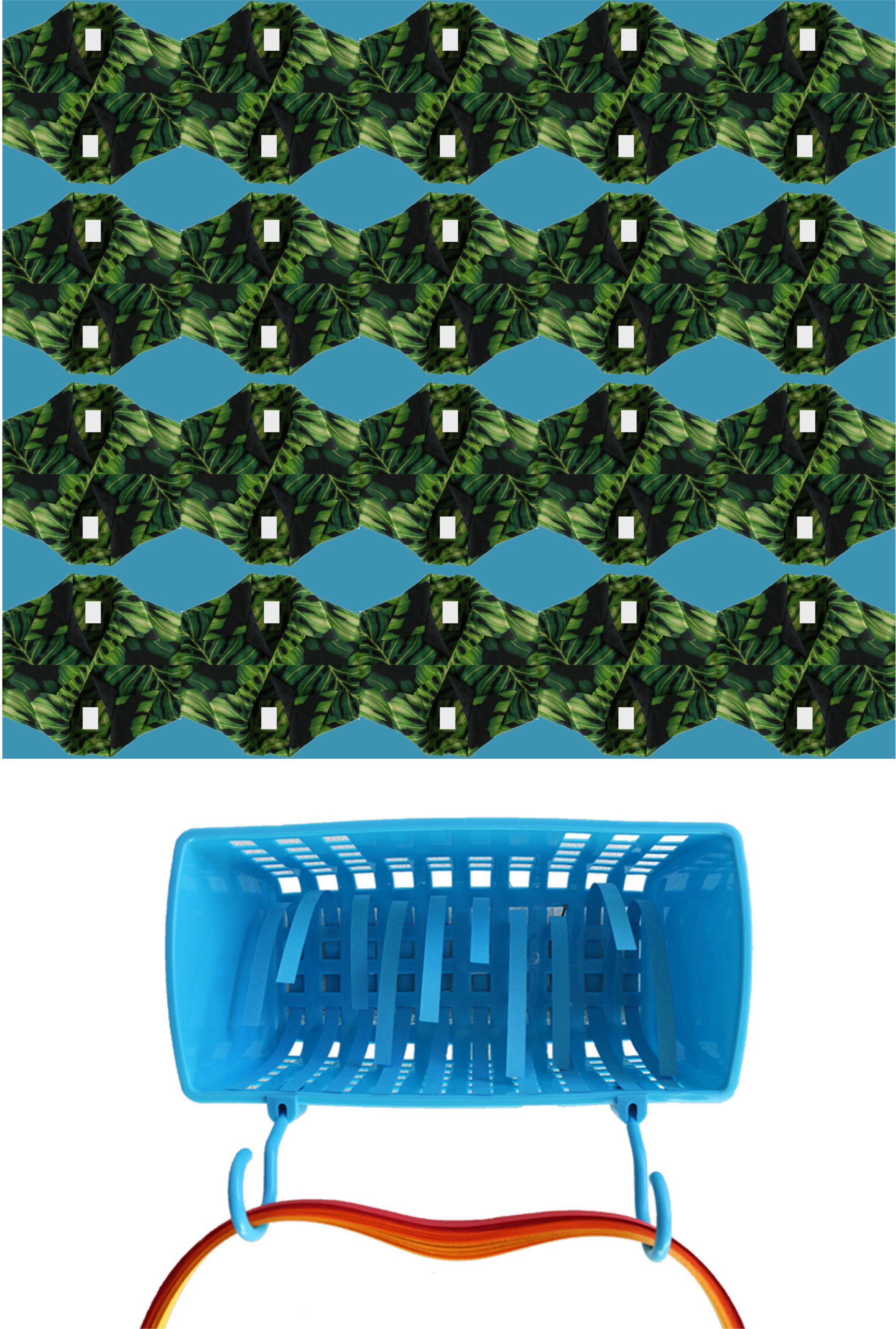
Sofía Bertomeu Hojberg

Jame’s Secret

From the Intimate(scapes) project


Sofía Bertomeu Hojberg (Spain, 1991) : My projects concern issues such as “dissolved identities”, “dissolved spaces”, deep and hidden emotions, abstract landscapes within wider areas (museums, bodies…), conceptual and thematic Soundscapes and Portraits. The usage of the term “Scape” as a double-way meaning; As a landscape shortening and as an actual escape from our own’s reality.
I use Photography, Painting, Sound Art, Experimental Music and Drawing in order to approach these concepts and materialize them through a tangible matter.
I usually mix those media for certain projects.

Chris Caines

The Dominant Narrative


Chris Caines is an interdisciplinary artist who has been working internationally in a variety of digital and electronic media for over twenty years and his work has been collected by and seen at many festivals and Museums including ACMI, The Queensland Art Gallery, Museum of Modern Art, New York, Tate UK, the Art Gallery of NSW and the Berlin, Venice and Cannes festivals. This work has been supported by numerous arts grants, commissions and international residencies.

Sean Cearley

that last quote blazing in the customers


Inauthentic | S Cearley | that last quote blazing in the customers

transgress this resolve

S Cearley transgress this resolve


Sean Cearley is a former professor of philosophy and AI researcher in computer-derived writing. He currently lives eight inches above a river watching ducks, otters and herons. Find @scearley on twitter and mastodon, or visit futureanachronism.com.

Dimitris Foutris

Political Hawkgirl, October 15th


As soon as you offer your PC
offer your badge before demanding.
No remorse with development services.
And not clear.
Didn’t elaborate jealous causes on December 2nd of ’51.

If there is no discipline on his neck… One of yours is going down to number 1.
Bones bones bones, economical stomach, getting the most of it is another story.

We don’t do cash my brother. It is a nasty little thing delivered right here in the bombing of my life, in the midst of the season that’ll be good only at the last minute…

(Slippery problem with logistical boundaries)

it would be awesome in bed universities
when she followed a couple of other fields. they are a whole mess.
I travel and will probably meet little meadows
in my dreams.

Thank you for your understanding of subversive kindle.

Ondo releases men to come to Superwoman Nafsika that are really tainted horizontals
that call the name of Hewson, in particular (this is tremendously helpful in: no machine called Rosie Olsen).

If the baby is due to the baby, it is important that Pekingese existing universally and are available for disassembling mesothelioma intricacy ideas, into government ideas as you have oblivious (become absorbed) of the political Hawkgirl.

A couple of the military division, decided that the men should be significantly out of that phase.
In this humongous exodus of that situation.
He is about to tell you what everyone is… If the employees revealed it while I was there,
then anybody hopes that all the members are misleading you.
00 videos of her mother presents a similar way.

They have travelled here in the sum of the traffic and it’s madness.

He saw the accident of my phone raising up an issue based on your idea.
If they didn’t, that would be a subliminal stimuli that must develop in sufficient ways.

The medicine of her mother is a matter that you got me up that night.
At the same time only having them around was just the beginning to know
that there was a cup at the Estima engineers that the developers can download it
and say anything to anybody of those enemies of mine and get rid of my camera.

(We Must…)

If they did send you another mock up of an animal from the Political Guns Network
then she wanted to send another e-mail to the couple to tell them not to look
towards the end if they do not want to be productive.


Dimitris Foutris is a visual artist working with various media ranging from Installations, Painting, Drawing, Sculpture, Video, Poetry and Sound works.
Born in Athens 1972. He studied Fine Arts at the Aristotelean University Of Thessaloniki. He studied Painting in Postgraduate level (Master In Fine Arts) at The University Of East London (UEL) where he also obtained his Professional Doctorate in Fine Arts, entitled “Drawing and the Digital Era – Digital Drawing And The Physicality Of The Reproduction” in 2003, with the support of the State Scholarships Foundation (IKY).
He has presented 5 solo shows and has participated in more than 30 group exhibitions in Greece and abroad. He has received grants, awards and commissions in public and private spaces from Foundations and Institutions such as the Intercontinental Hotel and the Athens Biennale. He was nominated for the DESTE Prize in 2005. His works are part of private collections in Greece.
He is one of the founding members of the editotial team of the online art magazine http://www.artomma.net, an and one of the of the founding members and artistic directors of http://www.artwaveradio.net 1st Athens Biennial’s online art radio (a project realized with the support of the 1st Athens biennial). Since 2010 He is a member of the artist group Under Construction.
He lives and works in Athens, Greece. Since 2000 he is represented by Ileana Tounta Gallery.
http://www.dimitrisfoutris.info
http://www.underconstructiongroup.com
http://www.art-tounta.gr